
AI BOOST Level 3: When students take up the baton
Collaboration
7 min readBy Juliusz Tomeczek
January 16, 2025 will go down in my memory as one of those special days that confirm that sharing knowledge makes profound sense. At the recent AI BOOST meeting at the Cracow University of Economics, I saw something that filled me with real pride - students who, just weeks after starting their AI adventure, are able to use these tools in a truly creative and professional way.
Projects that delight
Analysis of media sentiment toward geopolitical conflicts
The first group surprised us with an ambitious analytical approach. Using ChatGPT to generate code in Python, they created a tool to analyze the sentiment of online articles about global conflicts. This shows how AI can support serious social and geopolitical research.
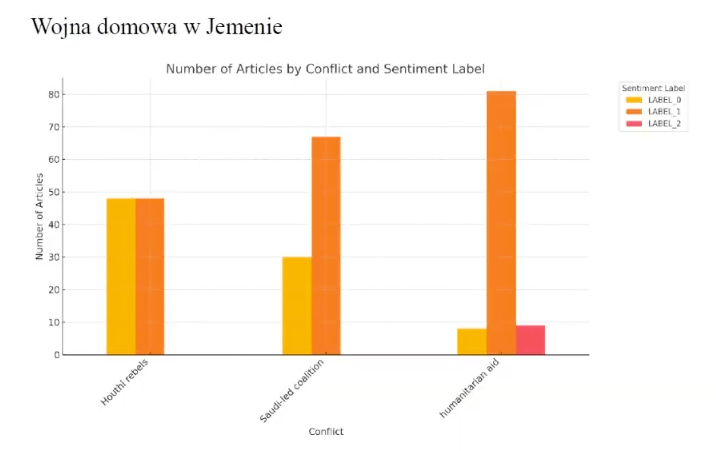
Result of an app exploring the sentiment of articles on armed conflict “Civil War in Yemen”.
Create a book on your own terms
Another team demonstrated the true synergy of AI tools - from ChatGPT to DALL-E to speech synthesis.
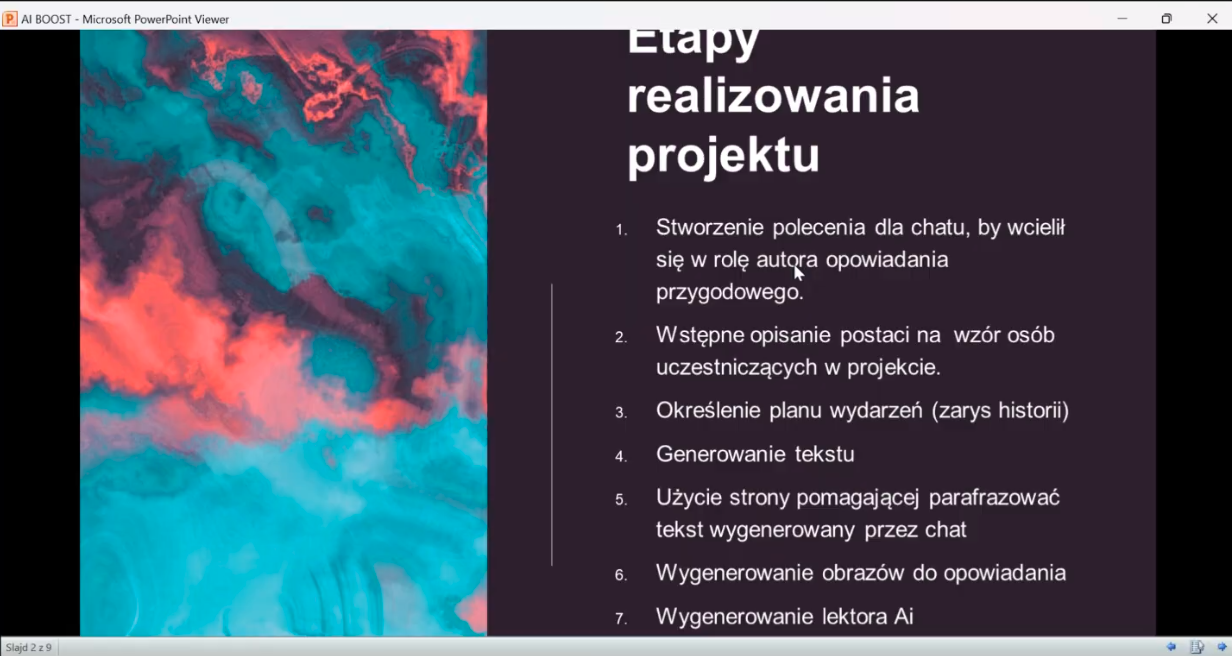
Project implementation plan.
Translation of text from the image:
Project Implementation Stages
- Creating a prompt for the chat to assume the role of an adventure story author.
- Initial character descriptions based on the people participating in the project.
- Defining the event plan (story outline)
- Text generation
- Using a website that helps paraphrase text generated by chat
- Generating images for the story
- Generating an AI narrator
They created a full story about their group, enhanced with illustrations and an audio track. This is a great example of how AI can support creative multimedia projects.
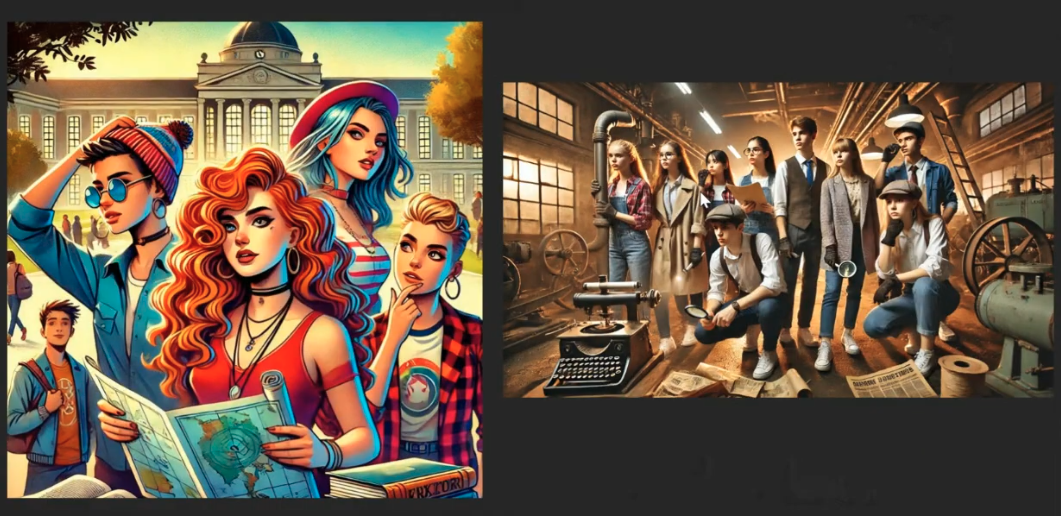
The result of working with the DALL-E model.
Science-based cookbook
This group particularly surprised me. Not only did they use ChatGPT, Claude AI, Copilot and NotebookLM to create content, but they also reached out to SCISPACE, Elicit and Litmaps and Typeset to find a scientific basis for their recipes.
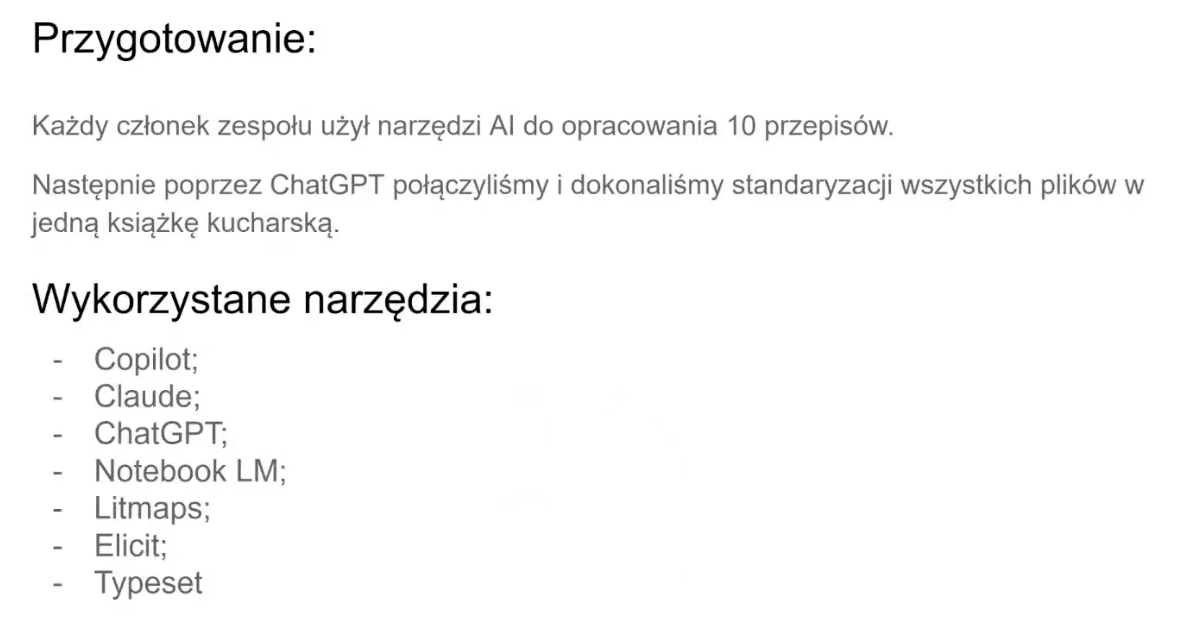
Scope of work.
Translation of text from the image:
Preparation:
Each team member used AI tools to develop 10 recipes.
Then, through ChatGPT, we combined and standardized all files into one cookbook.
Tools used:
- Copilot;
- Claude;
- ChatGPT;
- Notebook LM;
- Litmaps;
- Elicit;
- Typeset
This shows a mature approach to combining creativity with academic rigor.
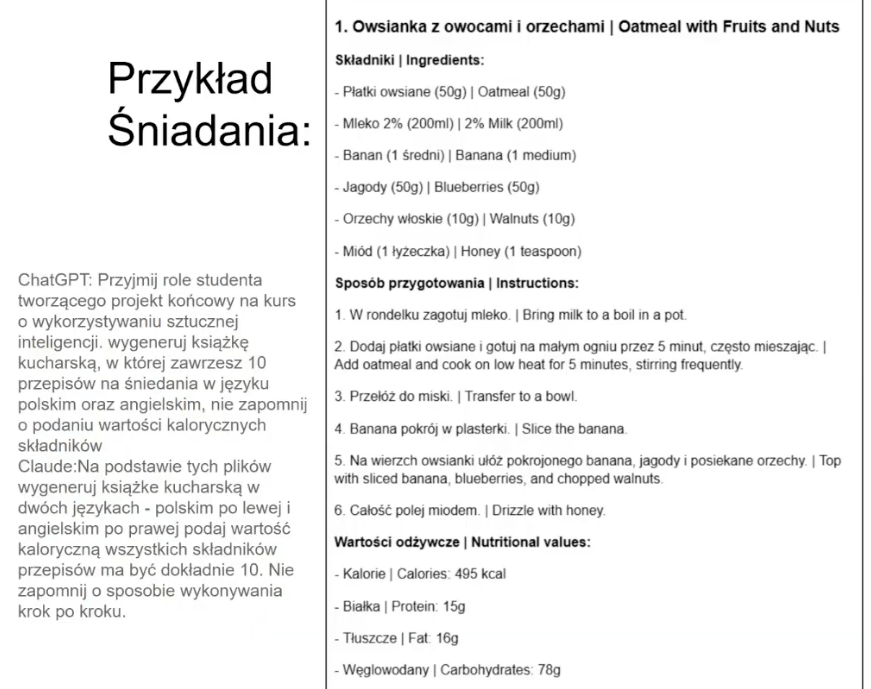
Example of one of the recipes, tasty :)
Translation of text from the image:
Breakfast Example
ChatGPT: Take on the role of a student creating a final project for a course on using artificial intelligence. Generate a cookbook containing 10 breakfast recipes in Polish and English, don’t forget to include the caloric values of the ingredients.
Claude: Based on these files, generate a cookbook in two languages - Polish on the left and English on the right, provide the caloric value of all ingredients, there must be exactly 10 recipes. Don’t forget about the step-by-step preparation method.
- Oatmeal with Fruits and Nuts
Ingredients:
- Oatmeal (50g)
- 2% Milk (200ml)
- Banana (1 medium)
- Blueberries (50g)
- Walnuts (10g)
- Honey (1 teaspoon)
Instructions:
- Bring milk to a boil in a pot.
- Add oatmeal and cook on low heat for 5 minutes, stirring frequently.
- Transfer to a bowl.
- Slice the banana.
- Top with sliced banana, blueberries, and chopped walnuts.
- Drizzle with honey.
Nutritional values:
- Calories: 495 kcal
- Protein: 15g
- Fat: 16g
- Carbohydrates: 78g
Plan of the podcast
A project that went beyond our course.
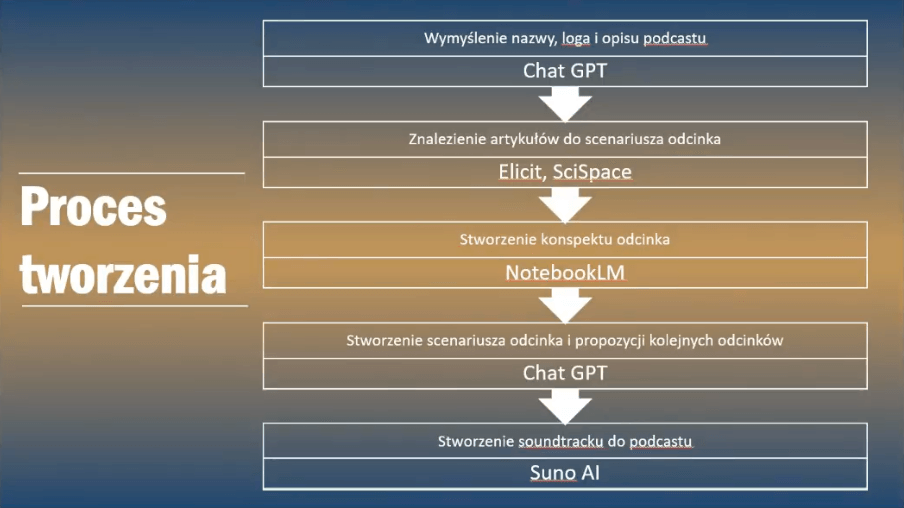
Creation process.
Translation of text from the image:
Creation Process
- Creating the name, logo and podcast description
- Tool: Chat GPT
- Finding articles for episode script
- Tool: Elicit, SciSpace
- Creating episode outline
- Tool: NotebookLM
- Creating episode script and proposals for future episodes
- Tool: Chat GPT
- Creating podcast soundtrack
- Tool: Suno AI
The team not only prepared a comprehensive plan for the 6 episodes, but also learned on their own how to use Sunto AI for sound production. This shows that we gave them not only the tools, but also the ability to develop on their own.
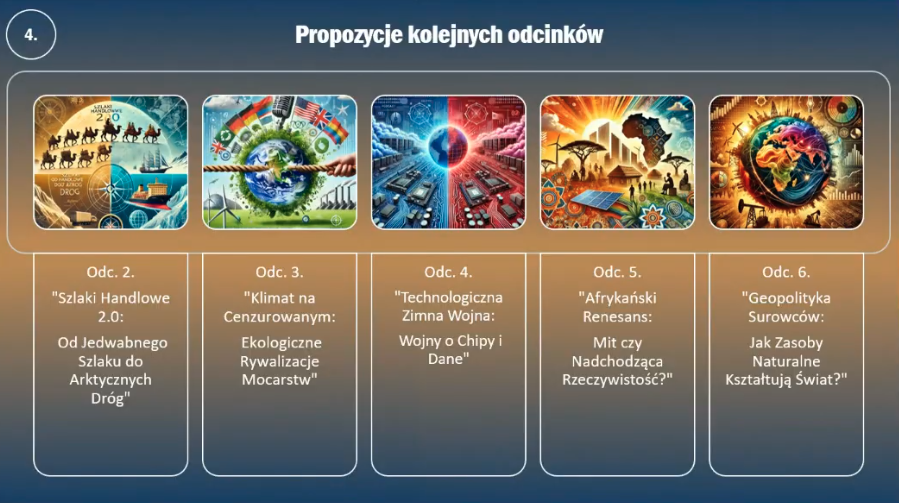
Plan for future episodes of the podcast.
Translation of text from the image:
Proposals for upcoming episodes
- Ep. 2.
- “Trade Routes 2.0: From the Silk Road to Arctic Passages”
- Ep. 3.
- “Climate Under Scrutiny: Ecological Rivalries Between Superpowers”
- Ep. 4.
- “Technological Cold War: The Battle for Chips and Data”
- Ep. 5.
- “African Renaissance: Myth or Coming Reality?”
- Ep. 6.
- “Geopolitics of Resources: How Natural Resources Shape the World?”
Inclusion quiz
.
The last group created an interactive quiz using ChatGPT to help visitors discover their “spiritual neighborhood” of Krakow.
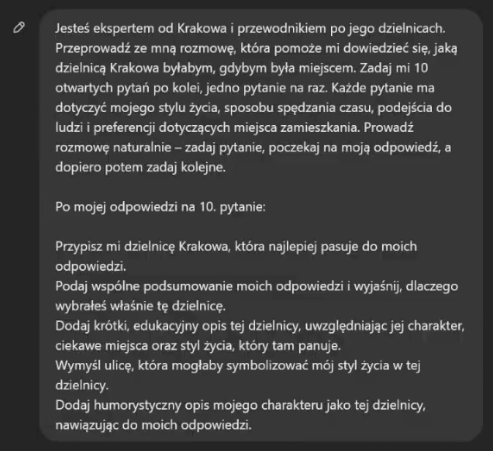
Developed prompt.
Translation of text from the image:
You are an expert on Krakow and a guide to its districts. Have a conversation with me that will help me discover which district of Krakow I would be if I were a place. Ask me 10 open questions one by one, one question at a time. Each question should be about my lifestyle, how I spend my time, my approach to people, and preferences regarding place of residence. Conduct the conversation naturally – ask a question, wait for my answer, and only then ask the next one.
After my answer to the 10th question:
- Assign me a district of Krakow that best matches my answers.
- Provide a common summary of my answers and explain why you chose this particular district.
- Add a brief, educational description of this district, including its character, interesting places, and the lifestyle that prevails there.
- Create a street that could symbolize my lifestyle in this district.
- Add a humorous description of my character as this district, referring to my answers.
This is a great example of how AI can serve social and inclusive purposes, with a touch of humor and local color.
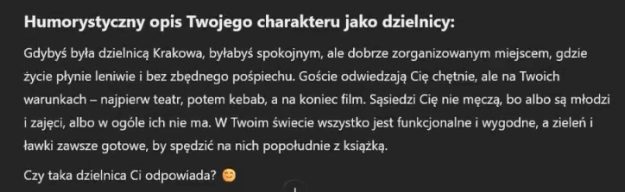
Fragment of an answer provided by ChatGPT as part of the quiz.
Translation of text from the image:
Humorous description of your character as a district:
If you were a district of Krakow, you would be a calm but well-organized place where life flows leisurely and without unnecessary rush. Guests visit you willingly, but on your terms – first theater, then kebab, and finally a movie. Neighbors don’t bother you, as they’re either young and busy, or not there at all. In your world, everything is functional and comfortable, with greenery and benches always ready for an afternoon with a book.
Does such a district suit you? 😊
Technology bonus
Using the remaining time, I showed the students some more news from the world of AI:
- The function of projects in ChatGPT
- Creation of personalized GPT’s
- PERPLEXITY as an alternative to Google
Final Reflections
I found the implementation of the AI BOOST project an extremely inspiring experience. Seeing how the students went from the basics to advanced applications of AI in such a short period of time, I am convinced that the future of the technology in the Polish academic environment looks bright.
Thank you also for recognizing my contribution to this project
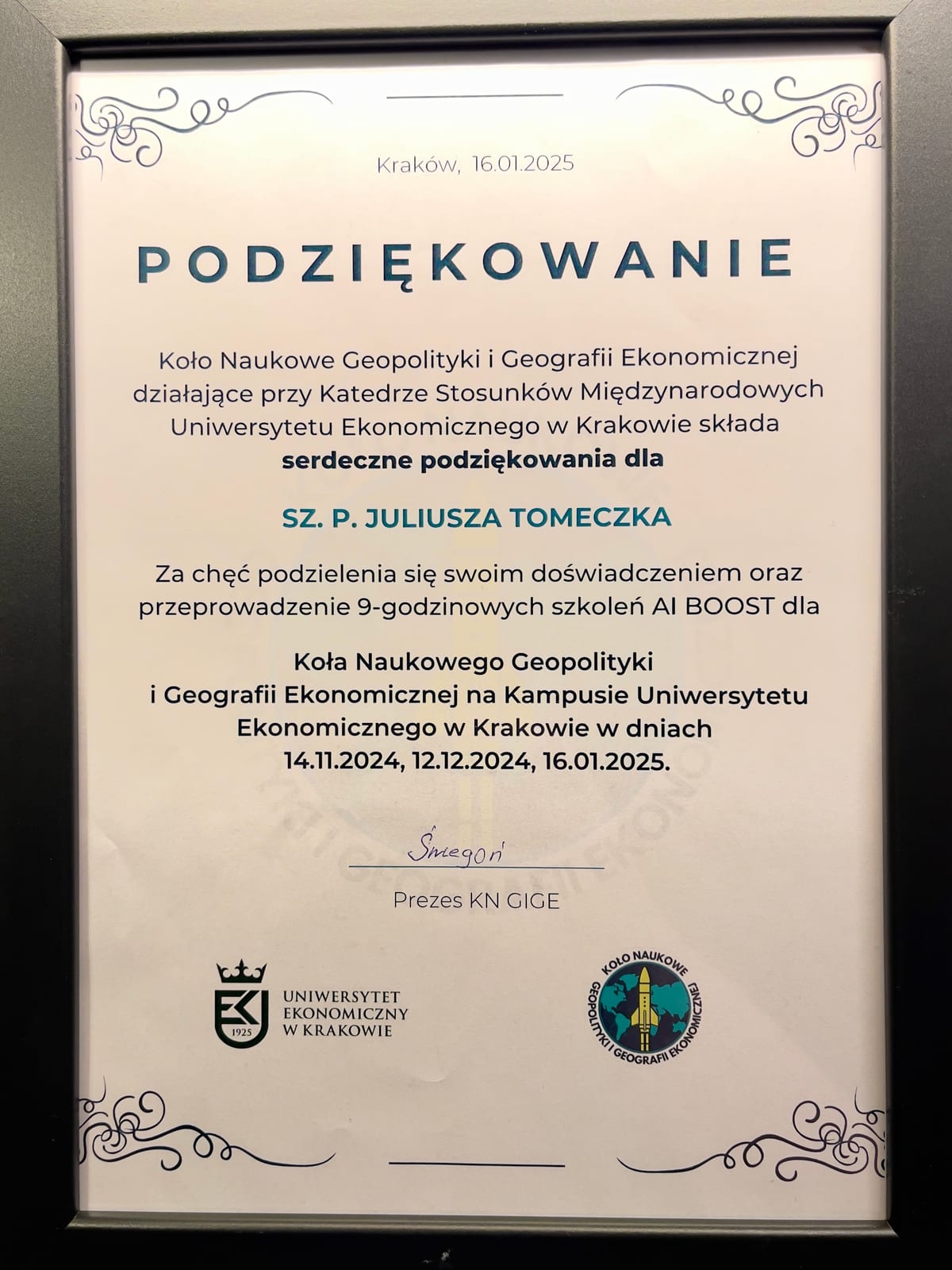
Translation of text from the image:
Krakow, 16.01.2025
LETTER OF APPRECIATION
The Scientific Club of Geopolitics and Economic Geography operating at the Department of International Relations of the Cracow University of Economics extends sincere thanks to
MR. JULIUSZ TOMECZEK
For willingness to share his experience and conducting 9-hour AI BOOST training sessions for the Scientific Club of Geopolitics and Economic Geography at the Campus of the Cracow University of Economics on 14.11.2024, 12.12.2024, 16.01.2025.
[signature] President of SC GEG
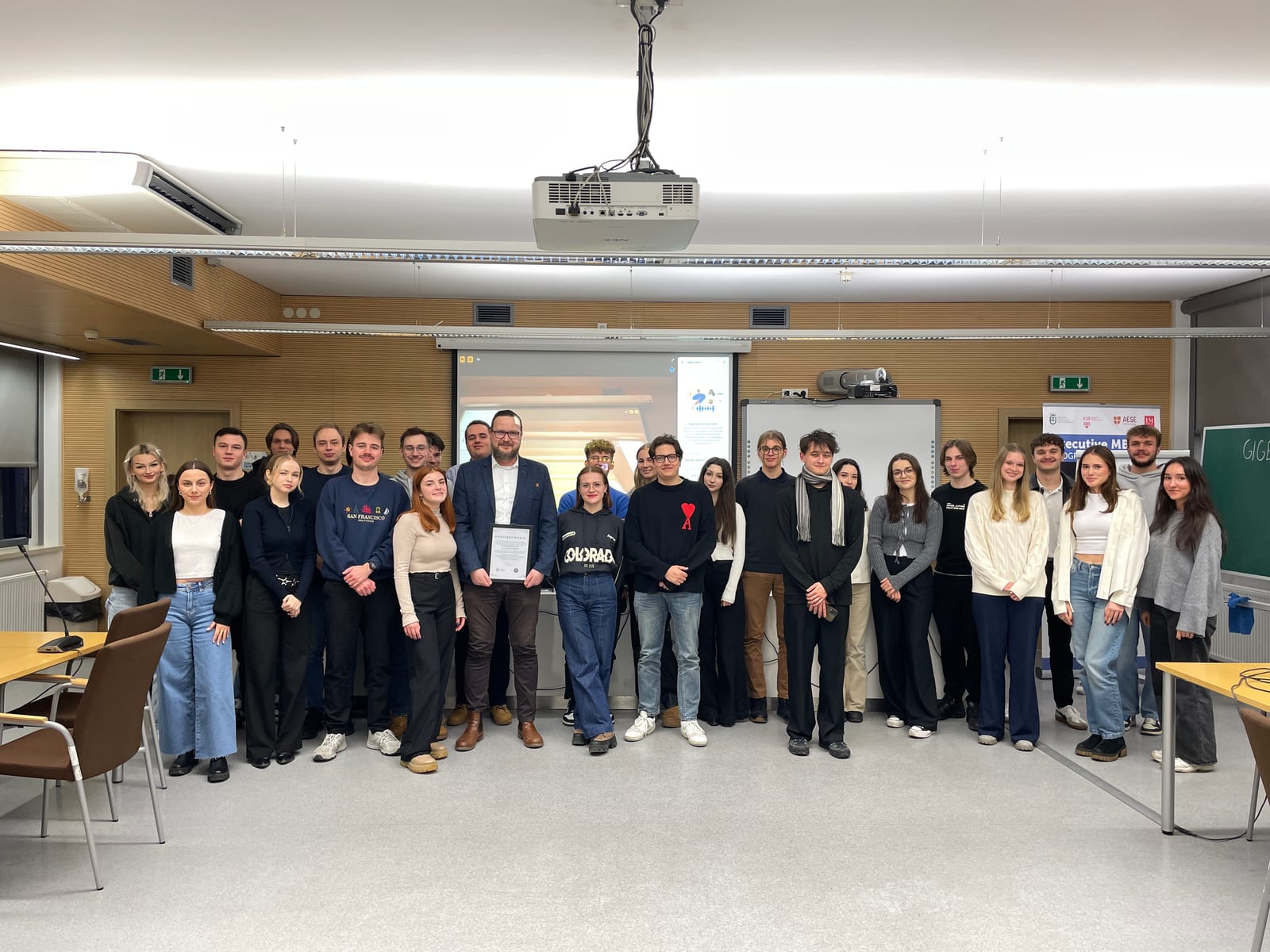
From my side, thanks are due to the entire Scientific Circle of Geopolitics and Economic Geography of UEK for the great cooperation and commitment to this project. I believe that this is just the beginning of your adventure with AI.
Note!
This article was written in collaboration with Claude 3.5 Sonnet, an advanced language model from Anthropic. As an AI-conscious user, I use the latest technology to create valuable content, while maintaining full control over the form and content of the publication.This article has also been automatically translated from Polish using DeepL. If you find any errors, please let me know in the comments.

About the author
Juliusz Tomeczek
My name is Juliusz Tomeczek. I run the AI for Everyone blog and publish articles here about artificial intelligence.