
AI bias
Concept
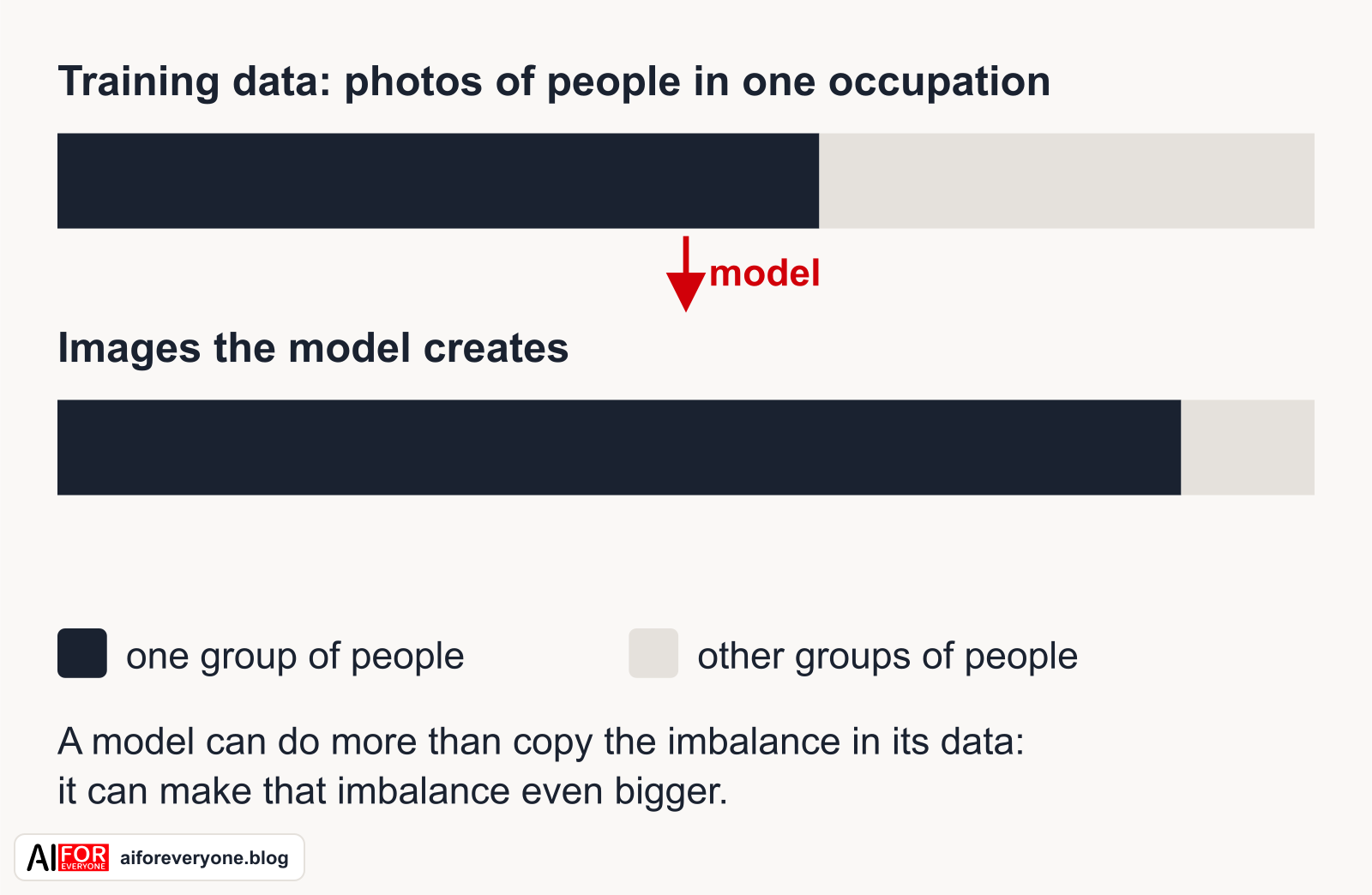
Google’s Machine Learning Glossary describes bias, in the ethical sense, as stereotyping, prejudice, or favoritism toward some things, people, or groups over others. According to the glossary, such biases can affect how data is collected and interpreted, how a system is designed, and how people use it. The glossary also gives a second meaning: a systematic error introduced when data is sampled or reported, for example, when the data doesn’t properly represent the group it is supposed to describe. A model that learns from such data inherits that skew.
In 2022, Federico Bianchi and his coauthors studied the images that widely available text-to-image generators produce. Ordinary prompts that named an occupation produced images with strong racial and gender imbalances. The stereotypes persisted even when a prompt explicitly asked for images that contradicted them, and the guardrails that the companies behind the generators had added did not remove them either. The authors warn that because so many people use these generators, the stereotypes spread on a massive scale.
In my articles
In my February 2025 article on generative AI, I write that generative systems often reflect biases present in their training data, and I give the example of images of people in various professions that can perpetuate gender or racial stereotypes. The study by Bianchi and his coauthors describes exactly this kind of case.
Sources
Related articles
Related entries
Last checked:
All entries